Living in Iceland

This page contains:

Welcome!

Iceland is a country of extreme contrasts and dramatic landscapes. Widely known as “the land of fire and ice,” it is home to some of the largest glaciers in Europe and some of the world’s most active volcanoes.

Iceland is also the land of light and darkness. Long summer days with near 24-hours of sunshine are offset by short winter days with only a few hours of dim daylight—the perfect scenario for enjoying the magical Northern lights.

Iceland sits on the Eurasian and North American tectonic plates and its greatest asset is undoubtedly its stunning landscapes of active volcanoes, lush green valleys, glacier-cut fjords, black sand beaches, and roaring rivers.

With its rich culture and history, Iceland is strategically positioned between the continents of Europe and America, and within reasonable travelling distance of them both.

A few facts

Icelandic is the national language. English is spoken widely, and Danish is the third language taught in schools in Iceland.

Click here for information on the right to interpretation.

Until the 20th century, Iceland was a fairly poor country, but it is now one of the most developed countries in the world with strong economic growth.

The national currency of Iceland is the Icelandic króna (ISK) and it is the only country in the world with such a small population that still has a floating exchange rate and independent monetary policy.

Except for a brief period after the 2008 banking crisis, Iceland has in recent years achieved high growth, low unemployment, and a fairly even distribution of income. The country ranks at the top in jobs and earnings, environmental quality and social connections, and above the average in income and wealth. These rankings are based on available selected data.
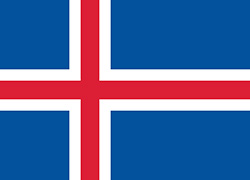
Icelandic-flag

Blue with a red cross outlined in white. The colours are symbolic for Iceland: Red represents the volcanic fires, white recalls the snow and glaciers, and blue is for the skies above, the sea and the mountains.

Reykjavik is known as one of the safest cities in the world, and that reputation holds true. However, it is a capital city, and no city is without crime. There are scuffles on the weekend and some people discover their wallets or purses missing. As long as you use common sense, and do not walk down a dark alley by yourself at 5 in the morning, you will not have any trouble here in Reykjavik. Likewise, all illegal drugs are forbidden in Iceland. 

The country is famous for its widespread use of renewable energy, its untouched landscapes and its growing focus on sustainable environmental policies.  In fact, about 85% of all houses in Iceland are heated with geothermal energy and renewable energy provides almost 100% of electricity production, with about 73% coming from hydropower and 27% from geothermal power. Those are impressive figures that do a lot to explain why Iceland is more pollution-free than many other countries around the globe. This doesn’t make it perfect, however, since there is still some way to go to reduce greenhouse gas emissions to satisfactory levels, for example, but there has been a major push towards energy switching in recent years, as the population has been encouraged to replace fossil fuel-burning vehicles with alternative energy cars.
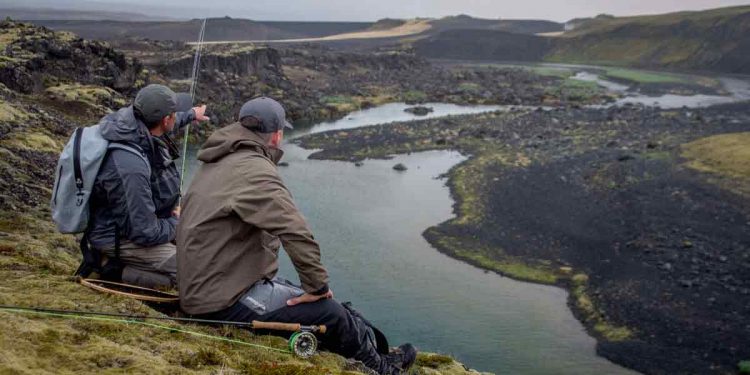
Fly fishing in Iceland

The people of Iceland

Due to Iceland’s geographic location, the population remained isolated and quite homogeneous until recently. Strong economic growth over the past several decades and a booming tourism sector more recently, have drawn greater numbers of immigrants to Iceland—bringing increased diversity to the once-homogeneous society.

Icelanders are said to be reserved at first but friendly and welcoming when you get to know them. When a foreigner is engaged in conversation with a group of Icelanders, people will generally swap over to English so that the whole group is able to understand. Most people in Iceland speak English quite fluently.

Icelanders are known to embrace equal opportunities for all sexualities and genders, and gender equality is among the highest in the world. Iceland was the first country in the world to elect a female president, back in 1980 and the country’s first female prime minister was the world’s first openly gay leader.

Icelanders are said to have a special connection to nature, which has been depicted through literature, paintings, and folklores about the huldufólk or “hidden people” also knows as elves, trolls and other supernatural beings. It’s easy to understand why stories of the hidden people are prevalent when you have experienced the forces of nature in Iceland, including northern lights, picturesque rock formations and desolate lava fields.

Some Interesting Facts About Icelanders And Their Quirky Ways That Might Help You In Your Transition

One of the things that foreigners are sometimes puzzled by is Icelandic names. That’s because, instead of using family names, as is the custom in most Western nations, Icelanders have so-called patronymic or matronymic surnames. 

Patronymic last names are based on the first name of the father, while matronymic names are based on the first name of the mother. This means that if you ever need to find someone in the Icelandic telephone directory, you’ll discover that people are listed alphabetically by their first name rather than their surname.

Iceland is in many ways a great, but let’s face it, small nation, so when it comes to measuring themselves against other countries, Icelanders often likes to play with statistics and draw “per capita” comparisons. Thus, Icelanders believe they have the best handball team in the world per capita, the best football team, the most beauty queens, the strongest men… and the list goes on and on. They even claim to have the most Nobel price winners per capita …….. they have one.

One of the interesting things about the Icelandic population is that it comes from a very small gene pool. This is one of the reasons why genetic research has thrived so successfully in Iceland.

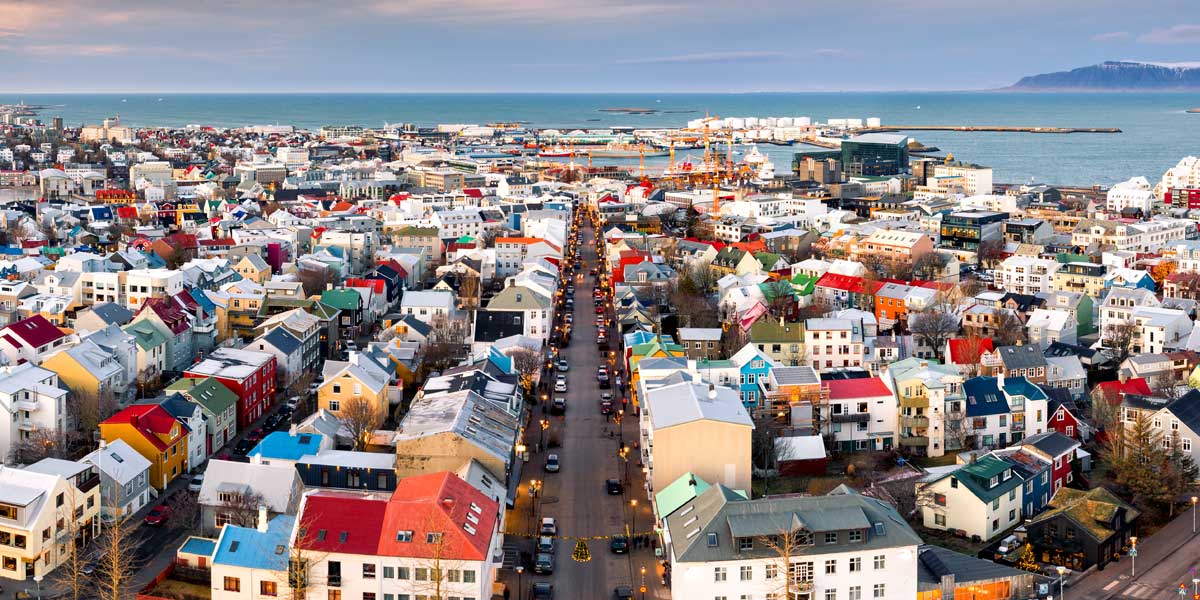
Reykjavik seen from Hallgrimskirkja church

Reykjavík and the capital city area

It is relatively easy to get around both in Reykjavík, or the capital city area as it is also called, but that area consists of six municipalities, Reykjavík being the biggest, then Kópavogur, Hafnarfjörður, Garðabær, Mosfellsbær and Seltjarnarnes.

The bus network is extensive, and it is relatively easy to figure out.

Commuting In Reykjavik

If you don´t have a bicycle or a car, it is a good idea to learn the bus system here in Reykjavik. It is called Strætó. The website can show you the bus routes, timetables, connections and price-plans. There is even an app that you can download that will allow you to buy tickets on your phone and check bus schedules. Additionally, you can either bring the exact change or buy a bus card. Stræto offers a monthly bus card, which allows you to use the city network. If you buy a three-months card, you will get one month free.

Taxis are most often easy to get, simply call 588 5522 or 561 0000. It is also relatively easy to rent a car, although the period from May to September can be difficult and expensive as rental cars are in high demand among tourists these months.

Electrical scooter sharing services:

Hoop

Zolo Reykjavík

National holidays and opening hours

Shopping hours in Reykjavik are typically:


Monday-Friday: 9:00/10:00-18:00/19:00,

Saturday: 10:00-18:00

Sunday: 12:00-18:00 or closed

Some grocery stores are open until 23:00 or 24 hours


“There are no work obligations on public holidays, but employees should be paid their fixed and regular wages for the day.”

  • January 1, New Year’s Day
  • Holy Thursday
  • Good Friday
  • Easter Sunday
  • Easter Monday
  • First day of Summer, 3rd Thursday of April
  • May 1, Labor Day
  • Ascension Day
  • White Sunday
  • White Monday
  • June 17, Independence Day
  • First Monday in August, Bank Holiday
  • December 25, Christmas Day
  • December 26, Boxing Day
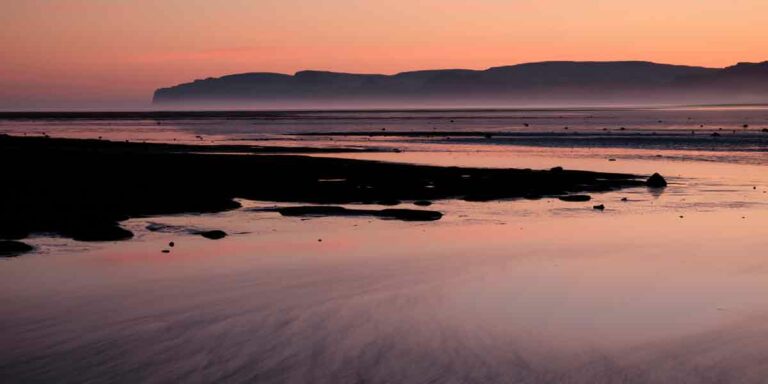
Sunset in Iceland

Bright summers and Dark winters

Iceland is also a land of strong contrast between light and darkness. Long summer days with near 24-hours of sunshine, and midnight sun in the northern part of the country, are offset by short winter days with only a few hours of gloomy daylight—thus (sometimes) a perfect scenario for enjoying the magical Northern lights. Both extremes can be difficult to adapt, especially for foreigners who are not accustomed to these circumstances.

One advice for the late spring and early summer – the bright nights – is simply using thick darkening curtains. And if that is not enough, or not available, sleep masks come in handy.

The best solution to cope with the dark winter months is to simply embrace it and enjoy those cozy nights at home in the candlelight, watching movies or reading a good book or staring at the amazing Northern Lights. The period of real darkness is actually quite short and only lasts a couple of months. By the end of January, you can certainly feel the days getting longer.

Icelanders have gotten pretty resilient when it comes to dealing with the winter gloom and here are some of the tips they would share with you:

•          Take Vitamin B/ D supplements

•          Take Icelandic cod liver oil, Lysi, a tablespoon a day should keep the winter blues away

•          Buy and use a sunlamp

•          Use a light alarm

•          Exercise regularly

•          Get out and enjoy the few hours of daylight there are

•          Focus on the light at the end of the tunnel and remember that in the summer you can play cricket or go hiking at midnight!

Sun Graph For Reykjavik On 1 June

This image shows Day/night length on 1 June. View the interactive Sun Graph here. 

Useful sources in English

Webpages with useful information for expats

Map of Iceland